How a Bicycle Accident Lawyer Builds Value in a Serious Injury Case
@andersoninfl142
October 19, 2026 · 16 min read
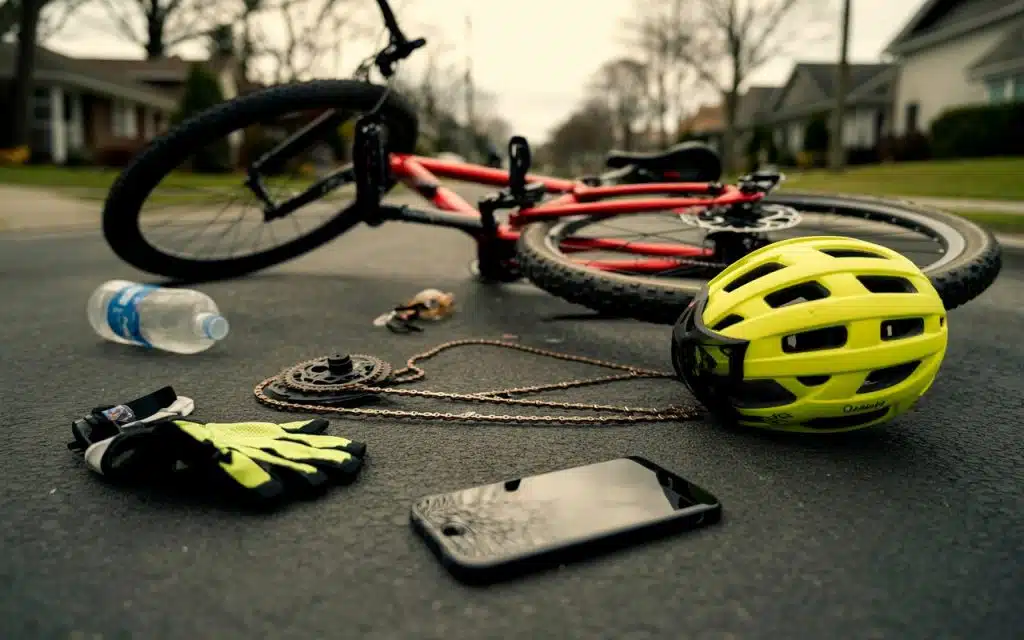

A serious bicycle crash can alter the shape of a person’s life in a matter of seconds. What begins as a commute, a training ride, or a quick trip to the store can end with a fractured pelvis, a traumatic brain injury, spinal damage, months out of work, and a stack of medical bills that grows faster than recovery. In that setting, people often ask a practical question: what does a Bicycle Accident Lawyer actually do to increase the value of a case?
The short answer is that value is rarely “created” out of thin air. It is uncovered, documented, protected, and presented with discipline. Serious injury claims are won or lost in the details, and the details disappear quickly. Skid marks fade. Bike damage gets repaired or thrown away. Witnesses forget. Surveillance footage records over itself. Insurance carriers start shaping the narrative almost immediately, often before the injured rider has even left the hospital.
An experienced lawyer steps into that chaos and starts building a coherent case. Not a loud case, not an inflated case, but a credible one that can survive scrutiny from adjusters, defense counsel, and, if necessary, a jury.
The first source of value is speed
In a bicycle injury claim, timing has real monetary consequences. A rider who suffers a serious collision may be sedated, disoriented, or simply focused on getting through surgery and pain control. Meanwhile, the defense side is already looking for ways to limit exposure. That usually means trying to frame the crash as unavoidable, shared fault, or minor in impact.
A Bicycle Accident Lawyer adds value early by preserving evidence before it vanishes. In practice, that can mean sending spoliation letters to nearby businesses that may have camera footage, obtaining 911 audio, securing body cam video, photographing road conditions, inspecting the bicycle before it is altered, and identifying all possible insurance policies. If a delivery van, rideshare driver, commercial vehicle, or government entity is involved, deadlines and notice requirements can become more complicated very quickly.
One of the most common mistakes in bicycle cases is assuming the police report tells the whole story. It often does not. Officers may arrive after the rider has been removed by ambulance. They may speak mostly with the driver. They may not understand road positioning, lane control rules, safe passing distance requirements, or how a dooring incident unfolds in real time. A lawyer who moves fast can fill in those gaps before the initial version of events hardens into accepted fact.
That early work matters because insurers do not pay for possibilities. They pay for proof.
Liability is not always as simple as “the driver hit the cyclist”
People outside the field sometimes assume a serious bicycle case is automatically strong if the rider was badly hurt. Severity helps explain damages, but it does not resolve fault. Insurance companies evaluate two questions separately: who caused the crash, and what did the crash cost the injured person?
A good lawyer develops liability with the same care used to document medical losses. That may involve accident reconstruction, vehicle black box data when available, phone records in distraction cases, visibility studies, measurements of lane width, and examination of impact points on the bicycle and vehicle. In urban cases, the geometry of the intersection can matter. In suburban cases, speed and sight distance often become central. In rural cases, lighting and shoulder conditions may carry more weight.
Bicycle crashes also produce fact patterns that defense lawyers like to exploit. Maybe the rider was not using lights at dusk. Maybe they moved left to avoid a pothole. Maybe they were outside a bike lane because debris made it unsafe. Maybe a driver claims the cyclist “came out of nowhere,” which is a common phrase and often a misleading one. The job is not to pretend these issues do not exist. The job is to explain them accurately, with evidence and context.
A rider who leaves a bike lane to avoid broken glass may be acting reasonably. A rider who takes the lane on a narrow road may be following traffic rules. A rider who suffers catastrophic injury while not wearing a helmet may still have a strong case, depending on local law and the medical facts. Serious value comes from legal judgment, not from slogans.
The medical side of the case often decides the financial side
Many claims look straightforward in the first month and become complicated by month six. That is especially true in bicycle trauma. Riders tend to suffer impact patterns that are different from many routine car wreck claims. Even at moderate speeds, a cyclist’s body can absorb direct force to the shoulder, hip, knee, face, wrists, and head. Road rash can look superficial to a layperson and still lead to infection, scarring, and painful debridement. A clavicle fracture may heal, but leave reduced range of motion that matters enormously to a mechanic, carpenter, nurse, or parent of young children.
A skilled lawyer builds value by understanding the medicine well enough to ask better questions. Not to practice medicine, of course, but to recognize what is missing from the record. Has the neurologic injury been fully worked up? Are the headaches post-concussive, cervical, vestibular, or some combination? Is the “back strain” actually masking a disc injury that became obvious only after swelling settled and imaging progressed? Has the client reached maximum medical improvement, or are future surgeries still on the table?
Insurance companies watch for soft spots in treatment history. Gaps in care, inconsistent reporting, prior injuries, delayed complaints, and vague restrictions all become talking points during negotiations. A Bicycle Accident Lawyer adds value by organizing the medical chronology so the injury story is clear, honest, and complete.
That process often includes translating medicine into plain language without oversimplifying it. A torn labrum means something to an orthopedic surgeon. To an adjuster or juror, what matters is the lived consequence: pain when lifting overhead, disrupted sleep, loss of strength, surgery, physical therapy, and an inability to return to former work or recreation. If the injured cyclist was a recreational rider, there is also a human loss that should not be minimized. For many people, cycling is not a hobby in the casual sense. It is transportation, stress relief, community, identity, and health maintenance all rolled into one.
Economic losses need more than a pile of bills
One of the least appreciated parts of serious injury work is how often damages are underdeveloped. People assume case value is just medical bills multiplied by some mysterious number. Real case evaluation is more demanding than that.
Past medical expenses are only the starting point. A lawyer may also need to document future care, lost wages, diminished earning capacity, household services, vocational impact, out-of-pocket costs, and long-term limitations. If the client is self-employed, calculating income loss can be particularly difficult. Tax returns may not tell the whole story. A contractor, for example, might lose not only billable work but also future contracts, reputation, physical capacity, and the ability to perform the most profitable parts of the job.
In a serious bicycle case, future damages can outweigh past bills by a wide margin. A 34-year-old rider with a pelvic fracture and lumbar injury may need intermittent pain management, possible future surgery, replacement equipment, and years of reduced productivity. A high earner with a hand injury might still return to work, but at a lower level of efficiency that compounds over decades. Those losses need support, often from treating doctors, life care planners, economists, or vocational experts, depending on the jurisdiction and the scale of the case.
Here is where experienced judgment really shows. Pushing every case into a full expert-heavy presentation can be wasteful and can erode net recovery if the policy limits are modest. On the other hand, underpreparing a case with substantial insurance coverage can leave a great deal of money on the table. The right strategy depends on both damages and collectability. Strong lawyers understand that a beautiful damages model is only useful if it connects to actual sources of recovery.
Insurance coverage is often where value is found or lost
Some of the largest differences in outcomes come from policy investigation, not courtroom drama. Many injured cyclists do not realize how many insurance layers might apply. The driver’s liability coverage is the obvious place to start, but it may not be the only one. There may be umbrella coverage. There may be employer coverage if the driver was working. There may be uninsured or underinsured motorist coverage through the cyclist’s own auto policy or a resident family member’s policy, depending on state law and policy language. In some cases, premises liability or road defect issues can overlap with the vehicle claim.
A Bicycle Accident Lawyer who knows how to chase coverage can increase the practical value of a case dramatically. I have seen situations where the apparent policy was too small to cover the harm, only for a deeper investigation to uncover commercial coverage or umbrella limits that changed the entire posture of the negotiation. I have also seen cases weakened because no one asked the right questions early enough about employment status, permissive use, household policies, or vehicle ownership.
This part of the job is not glamorous, but it matters. A catastrophically injured rider with a textbook liability case still cannot collect money that is not available. Conversely, a lawyer who identifies another valid layer of coverage can turn a frustrating claim into one that actually funds recovery and stability.
Credibility increases value more than theatrics
Insurance companies assess risk. Juries do too. They are not impressed by exaggeration for long. A serious injury claim gains value when it feels real, internally consistent, and well-supported at every step.
That means the lawyer has to make careful choices. Not every ache belongs in the demand package. Not every diagnosis should be highlighted equally. If there was a prior knee injury five years before the crash, hiding it is foolish. Better to confront it directly and show what changed after the collision. If the client posted smiling pictures at a family event during recovery, that does not automatically destroy the case, but it should be understood in context before the defense uses it to suggest full recovery.
Credibility also depends on client preparation. Many injured people have never given a deposition. They do not know how easily an imprecise answer can be used against them. A lawyer builds value by helping the client testify clearly about pain, treatment, work limits, and day-to-day consequences without drifting into speculation or overstatement.
That preparation is especially important in bicycle cases because some jurors and adjusters bring assumptions to the table. They may think cyclists are risk-takers, rule-breakers, or hobbyists who accepted danger. Those assumptions are not always spoken aloud, but they are present. The response is not outrage. It is disciplined proof that the rider was visible, predictable, lawful, and badly harmed by another person’s negligence.
The narrative of the crash matters
Every serious injury case needs a theory that makes sense from beginning to end. Why did this happen? Why was it preventable? Why are the injuries this serious? Why does the compensation request reflect real loss rather than opportunism?
In bicycle litigation, the strongest narratives are often simple. A driver turned without yielding. A passing motorist misjudged distance. A parked driver opened a door into a bike lane. A distracted commercial driver drifted into the shoulder. Simplicity helps, but the narrative still has to be earned through evidence.
The lawyer’s role is to connect the physical evidence, the law, the medicine, and the human consequences into one story. If the story has missing pieces, the defense will fill them. If the story is cluttered with weak claims, the strong claims can get diluted.
Sometimes the highest-value move is subtraction. A marginal road design claim against a public entity may complicate a case that is already strong against a clearly negligent driver. In another matter, adding the municipality may be essential because sight obstruction or roadway maintenance is the real driver of the event. Building value is not just about adding more parties or more allegations. It is about choosing the theories that best fit the facts and the available proof.
Negotiation is not merely demanding more money
Good negotiation in a serious injury claim is usually quiet, methodical work. It starts long before a formal demand letter. The defense watches the lawyer’s habits. Do they know the medicine? Have they documented future losses? Are they willing to litigate? Do they overplay weak facts? Do they send sloppy packages stuffed with records but no analysis?
A well-built demand can shift leverage because it shows the other side what trial would look like if the claim is not resolved. That does not mean pages of bluster. It means the key liability evidence is organized, the injuries are explained in Bicycle Accident Lawyer functional terms, the treatment timeline is coherent, and the damages ask is tied to facts rather than wishful thinking.
There are a few recurring pressure points that often raise value when handled properly:
- Preserving and presenting evidence that locks down fault
- Linking every major symptom to credible medical support
- Documenting future losses with enough specificity to be taken seriously
- Identifying all available insurance before negotiations harden
- Demonstrating readiness to file suit and carry the case through discovery
That final point matters more than many clients realize. Some insurers reserve their best money for firms that will actually try a case if needed. A lawyer does not need to posture, but they do need to be credible. If the defense believes the file will stall after a low offer, the numbers usually reflect that belief.
Litigation can increase value, but not automatically
Bicycle Accident LawyerThere is a popular assumption that filing a lawsuit always boosts settlement value. Sometimes it does. Sometimes it simply adds expense and delay. The decision should be strategic.
Filing suit can create leverage when the insurer is denying obvious liability, minimizing real injuries, or refusing to evaluate future damages honestly. Discovery tools can force production of records, sworn testimony, phone data, corporate policies, and other evidence that sharpens the case. Depositions can expose weak defenses. Expert disclosures can make long-term losses harder to dismiss.
But litigation has costs. Expert fees rise. Timelines stretch. Clients relive the crash in depositions and independent medical exams. In some cases, especially where coverage is limited and liability is admitted, an early policy-limits strategy may outperform years of litigation. The right Bicycle Accident Lawyer is not the one who always files suit. It is the one who knows when litigation is the best path to a better result.
Serious injury cases are also human cases
The legal file tends to sort life into categories: specials, wages, permanency, treatment dates, liens, impairment. Necessary categories, but incomplete ones. What actually moves a case, especially in the upper range, is the quality of the human proof.
How has this injury changed mornings, workdays, sleep, parenting, intimacy, mobility, confidence, and independence? Can the former long-distance rider now tolerate ten minutes on a stationary bike? Does a chef with wrist fractures still struggle to chop, lift, and plate at speed? Does a parent with a brain injury now need notes for basic tasks that once happened automatically?
These details are not decoration. They explain loss in terms people can understand. The strongest lawyers gather them carefully through client conversations, family interviews, photographs, employment records, and sometimes day-in-the-life material when appropriate. The point is not to dramatize. It is to replace abstraction with reality.
A case involving a femur fracture and head injury may have obvious high bills, but value often turns on whether the lawyer can show what those injuries mean over the next ten or twenty years. Does the client face post-traumatic arthritis? Can they return to their trade? Are they likely to need revision surgery? Have they developed anxiety riding near traffic, making their primary mode of transportation effectively unavailable? Those are real-world consequences, and they belong in the valuation.
Liens, subrogation, and net recovery require careful handling
Clients quite reasonably focus on gross settlement numbers. What reaches their bank account, however, depends on more than the top-line figure. Health insurers, government benefit programs, workers’ compensation carriers, and medical providers may all assert interests in the recovery. Mishandled liens can drain the result.
An effective lawyer adds value not only by increasing the settlement or verdict, but also by reducing what must be paid back where legally possible. That can involve negotiating medical liens, challenging unsupported charges, reviewing conditional payment claims, and structuring the closing process to protect the client from later reimbursement demands. A difference of tens of thousands of dollars can come from this stage alone in a serious injury matter.
This is another area where experience matters. Some lienholders are flexible with strong hardship presentations. Others follow formulas or statutory rules. A lawyer who understands the landscape can often improve net recovery even after the liability and damages fight is over.
What clients often overlook in the first week after the crash
Right after a major collision, people understandably focus on immediate survival issues. Yet a few practical decisions can affect case value down the line. The damaged bicycle should usually be preserved. So should the helmet, clothing, lights, and any onboard computer or camera. Photos should be taken before repairs or disposal. A pain journal can help if it is honest and consistent, particularly when symptoms fluctuate. And social media restraint is almost always wise.
Most important, treatment should be driven by medical need, not by legal strategy. Jurors and adjusters can usually tell the difference between care that follows a genuine recovery path and care that feels manufactured. A sound lawyer guides the case around the medicine, not the other way around.
The best value comes from judgment
There is no single move that makes every bicycle injury case more valuable. No magic phrase in a demand letter. No universal formula based on hospital bills. Value comes from a series of good decisions made early and reinforced consistently: preserving evidence, proving fault, understanding medicine, documenting long-term loss, identifying all coverage, maintaining credibility, and choosing the right moments to negotiate or litigate.
That is what a Bicycle Accident Lawyer does at a high level. The work is part investigation, part strategy, part storytelling, and part risk management. When it is done well, the case reflects the rider’s actual losses with clarity and force. And in serious injury litigation, clarity and force are what turn a damaged claim into a fully realized one.
CGH Injury Lawyers
2701 Lawrence St Suite 201
Denver, CO 80205, United States
Phone: +1 720-669-8062
FAQ About Bicycle Accident Lawyer
Who is at fault if a car hits a bicycle?
Fault depends on the evidence and the traffic rules that applied to the collision. A driver, cyclist, or another party may share responsibility. Police reports, witness accounts, video, and the physical evidence can help establish what happened. A collision with a car does not automatically determine legal fault.
Can you sue someone for hitting you on a bike?
You may have a claim when another person's negligent conduct causes your injuries and losses. The available evidence, applicable deadlines, insurance coverage, and any shared fault affect your options. A lawyer can review the circumstances and explain whether an insurance claim or lawsuit is appropriate; compensation is not guaranteed.
What percentage does an injury lawyer usually take?
There is no single percentage that applies to every injury case. Many lawyers use a contingency fee based on a share of the recovery, with the terms stated in a written agreement. Ask how the percentage is calculated, whether it changes during litigation, and how case expenses are handled before signing.